 SEO
SEO

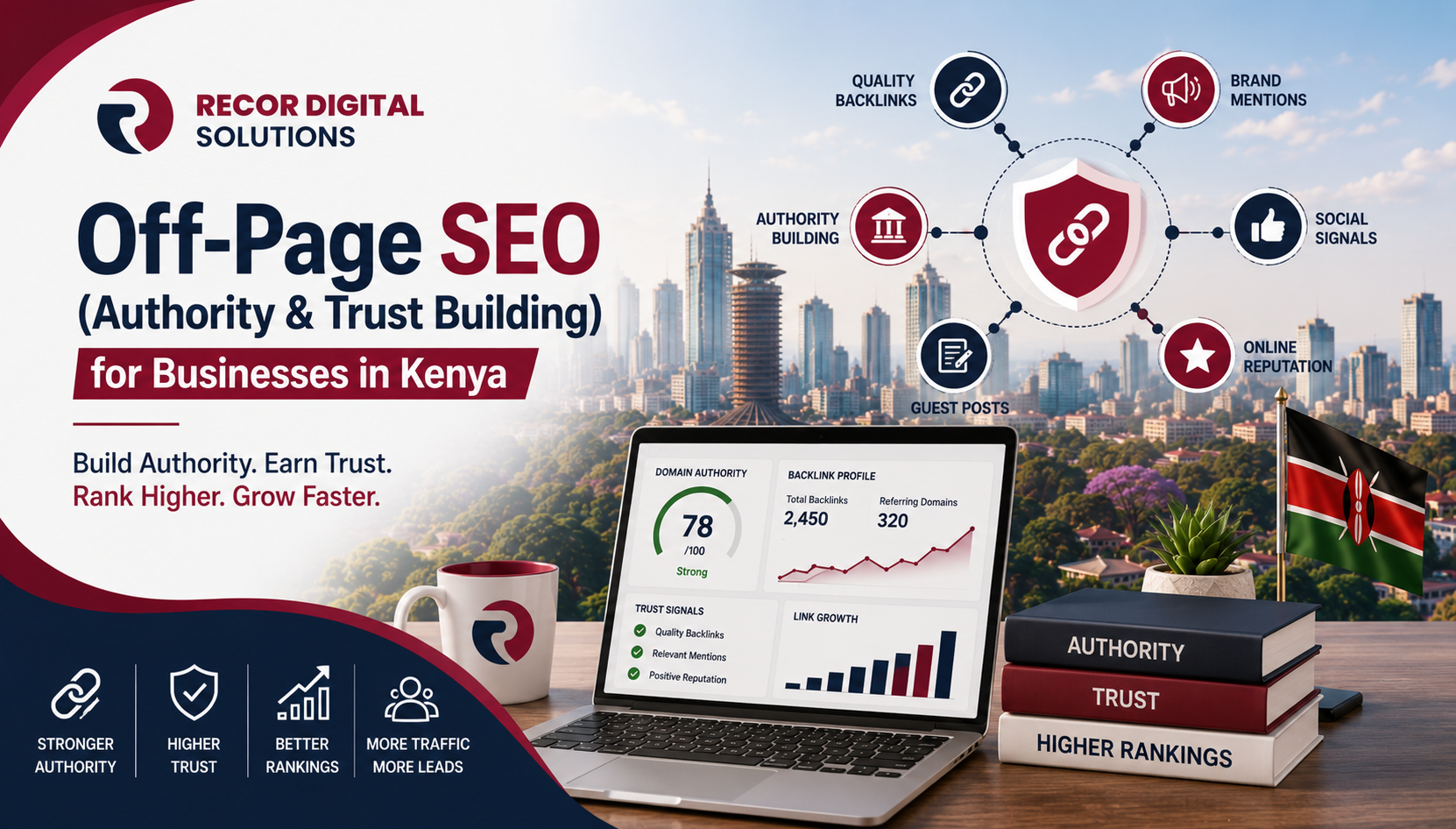
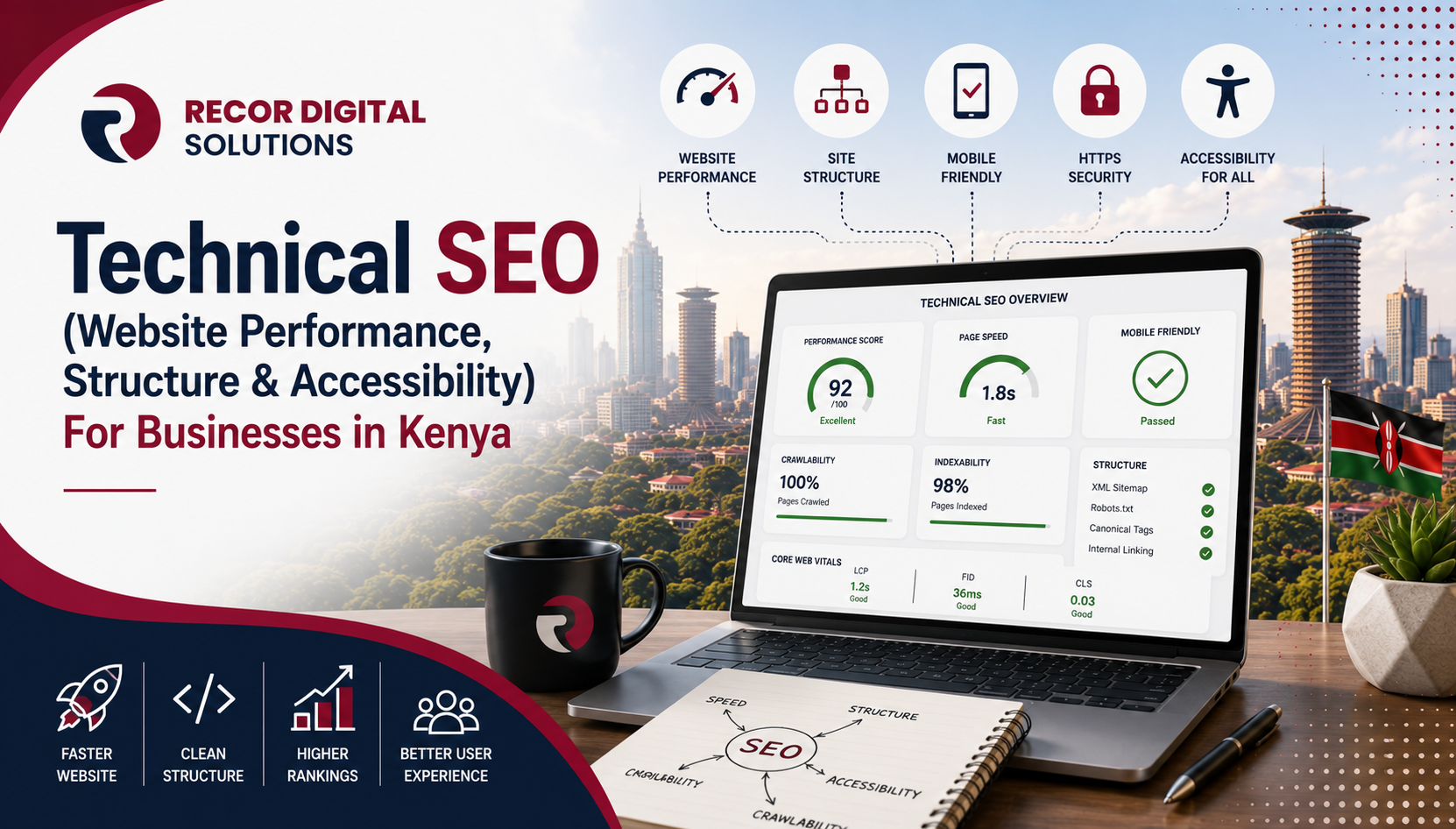
Search Engine Optimization (SEO) is built on three core pillars: On-Page SEO, Off-Page SEO, and Technical SEO. This guide breaks down the essential on-page SEO elements Kenyan businesses must implement to rank higher on Google, attract high-intent traffic, and generate consistent inquiries. Learn how keyword research, title tags, content structure, and internal linking work together to build long-term digital visibility and growth.
Search Engine Optimization is built on three foundational pillars:
1.
On-Page SEO
2.
Off-Page SEO
3. Technical SEO
1. On-Page SEO
On-page SEO involves optimizing individual pages on your
website to help search engines clearly understand your content and rank it for
relevant searches. It ensures that when searches for your service in Kenya or
your specific area of operation are made, Google understands what you offer,
where you operate, and why your website deserves to appear at the top of those
results.
For Kenyan businesses, strong on-page SEO is often the
difference between appearing for “insurance company in Nairobi” and not
appearing at all.
Key Components of On-Page SEO
1. Keyword Research & Search Intent
Keywords are the exact words and phrases your potential
customers type into search engines like Google when looking for services,
products, or information related to what you offer.
However, modern SEO goes beyond just identifying keywords.
It focuses on search intent — the reason behind a user’s search. Search intent
defines the primary goal or purpose of a query. Understanding intent helps you
create content that directly matches what users are looking for, increasing
your chances of ranking higher on search engine results pages (SERPs).
There are four main types of search intent:
Informational – The user wants to learn something or
find an answer to a question.
Example: What is corporate training?
Navigational – The user is looking for a specific
brand or website.
Example: Britam insurance contacts
Transactional – The user is ready to take action,
such as making a purchase or booking a service.
Example: Buy car insurance in Nairobi
Commercial – The user is comparing options before
making a decision.
Example: Best corporate training companies in Kenya
For service-based businesses, transactional and commercial
intent keywords are the most valuable because they attract high-intent
prospects.
2. Title Tags (Your Google Headline)
The title tag is the blue clickable headline that appears on
Google search results. It plays a critical role in both rankings and
click-through rates.
A strong title tag must:
1.
Include your primary keyword
2.
Be clear, specific, and benefit-driven
3.
Stay under 60 characters to avoid being cut off
Google uses your title tag to determine what your page is
about. If your main keyword does not appear in your title, your ranking
potential reduces significantly.
3. Meta Descriptions (Your Click Magnet)
Meta descriptions do not directly influence rankings, but
they strongly impact click-through rate (CTR). They provide a short summary of
what users should expect after clicking on your page.
A good meta description should:
1.
Clearly summarize the page
2.
Include the main keyword naturally
3.
Highlight a benefit or include a call-to-action
4.
Stay within 155–160 characters
Example:
“Looking for corporate training in Kenya? We offer
leadership, HR, and team-building programs tailored for growing businesses.”
A compelling meta description increases the likelihood that
users will choose your website over competitors on the search results page.
4. Header Structure (H1, H2, H3)
Headers organize your content for both users and search
engines. They create structure, improve readability, and help Google understand
the hierarchy and focus of your page.
A clear header structure typically follows this format:
H1 – The main topic of the page (only one per page)
H2 – The main sections supporting the topic
H3 – Subsections that expand on each H2
For example, a well-structured service page could look like
this:
H1: Corporate Training Services in Kenya
H2: Leadership Development Programs
H2: HR and Compliance Training
H2: Why Choose Our Training Solutions
This structure improves user experience, makes your content
easier to scan, and strengthens SEO clarity by reinforcing your primary and
secondary keywords naturally throughout the page.
5. Content Quality & Depth
Content remains one of the strongest ranking factors in SEO.
Google prioritizes content that demonstrates relevance, clarity, authority, and
usefulness.
Search engines favor content that is:
1.
Relevant to the user’s search query
2.
Clearly explained and easy to understand
3.
Authoritative and trustworthy
4.
Updated and accurate
5.
Locally relevant where applicable
Thin pages with 300 words of vague or generic information,
rarely rank in competitive Kenyan industries especially insurance, real estate,
consulting, or finance.
Your content should:
1.
Clearly explain your services and solutions
2.
Address common client concerns and objections
3.
Include frequently asked questions (FAQs)
4.
Highlight location relevance (Nairobi, Mombasa,
Kisumu, or your area of operation)
5.
Provide proof such as case studies,
testimonials, or statistics
The goal is to rank and position your business as the
trusted solution.
6. Internal Linking
Internal links connect pages within your website. They guide
both users and search engines from one relevant page to another.
For example, a blog post titled “Benefits of Medical
Insurance in Kenya” should link to your “Medical Insurance Plans” service page.
Effective internal linking:
1.
Helps Google crawl and understand your website
structure
2.
Passes authority between related pages
3.
Keeps visitors engaged longer
4.
Increases the likelihood of conversions
A well-structured website does not treat pages as isolated
pieces of content. Instead, it creates a connected ecosystem that supports
visibility and lead generation.
Why Do You Need On-Page SEO for Your Kenyan Business?
On-page SEO drives high-intent traffic people who are
actively searching to buy, book a service, or fill out an inquiry form. This
type of traffic is critical to your online success because it connects you with
customers who already need what you offer.
Many businesses in Nairobi, Kenya focus heavily on social
media marketing but overlook Google search traffic. Yet search traffic often
delivers more qualified leads because users are actively looking for solutions.
When your on-page SEO is properly structured:
1.
You rank for the right keywords
2.
You attract qualified and ready-to-convert
visitors
3.
You generate consistent inquiries and leads
4.
You reduce reliance on paid advertising
On-page SEO builds a strong and sustainable foundation for
long-term digital growth, helping your business remain visible, competitive,
and profitable online.